

In a box in my mom's basement, there's a notebook with my name on it. On the front, in giant, wobbly letters — the kind that could only be conjured by a six-year old — the words, ‘AMAZING STORIES.’
I was going to be a writer when I grew up.
The thing is, there's a reason why it's hard for children to be writers. Sure, I had a gift for making up sprawling worlds with all kinds of magical creatures.
But I didn't have anything else to give. My worlds were wondrous and weird. That's all they were. Pretty shells. Without insight, experience, or wisdom.
My stories went nowhere. And so, too, my fledgling career as a writer.
Years later, my dad got me a summer job in a factory. The heavy forge, where iron was melted and shaped, was a white-hot hellscape.
But I struck up friendships with the veterans. Over lunch, they'd share all kinds of facets of their lives — bad decisions, bad marriages, bad jokes. And how the hell they ended up in this Stygian abyss.
I soaked up their vulnerabilities.
And when I got home, before I even showered, I poured their truths into a notebook, filling page after page with stories inspired by their experiences. It was effortless. The heavy forge wasn’t some alien world. These men were not elves, or even dwarves. But phantoms of the factory. And they possessed my pen.
I felt like a real writer, carried by the momentum of ideas.
That experience helped give me the confidence to apply to a post-graduate program for journalism. Eventually, I became a reporter — at last, a professional writer!
Wouldn't mom be proud?
The thing is, journalism proved to be my writing’s worst enemy. You see, I've always felt like this ability was a gift. A kind of magic. The thing about magic is that you shouldn’t drink of it too greedily. Leave a little in the cup. And when next you thirst, you’ll find that cup full again. But when writing is your livelihood — when you have to milk that magic every day — you always drain the cup.
Sometimes, a mentor would say something nice about my work and ask, “Why don't you write a book?”
How could I explain? My cup was always empty.
“The dream melts away,” my mother said once, while we were killing bugs on the patio. “And in the process, time melts away. They could never pay you enough for that.
“One day you realize it’s not going you happen,” she added. “That's the most devastating thing that could happen to someone who's talented, who has dreams.”
She often surprises me with her insight. Sometimes, I forget she’s had a front-row seat to my life. She even said a few words that I couldn’t imagine many mothers saying.
“I understand why you did crack,” she began. “You were not that way when you were younger. You were excited about life. But life has a way of taking it down brick by brick.
“Unless you're the kind of person who's okay with that. But I knew you weren't.
“So I understand your addiction. It was because you were so disappointed. You were a victim. First of dad. And then the world.”
At the newspaper, little by little, I could feel my one and only superpower fade — blotted out by wit and wordplay and smothering self-importance.
That feeling of losing the only gift you've ever had is a special despair.
When I became a drug addict that loss seemed irreversible. I couldn't put two thoughts, much less sentences, together.
It was okay though. I had Crackynol 1000, the world's most powerful numbing agent. And so, a little boy’s dream of being a writer faded, at last, to black.
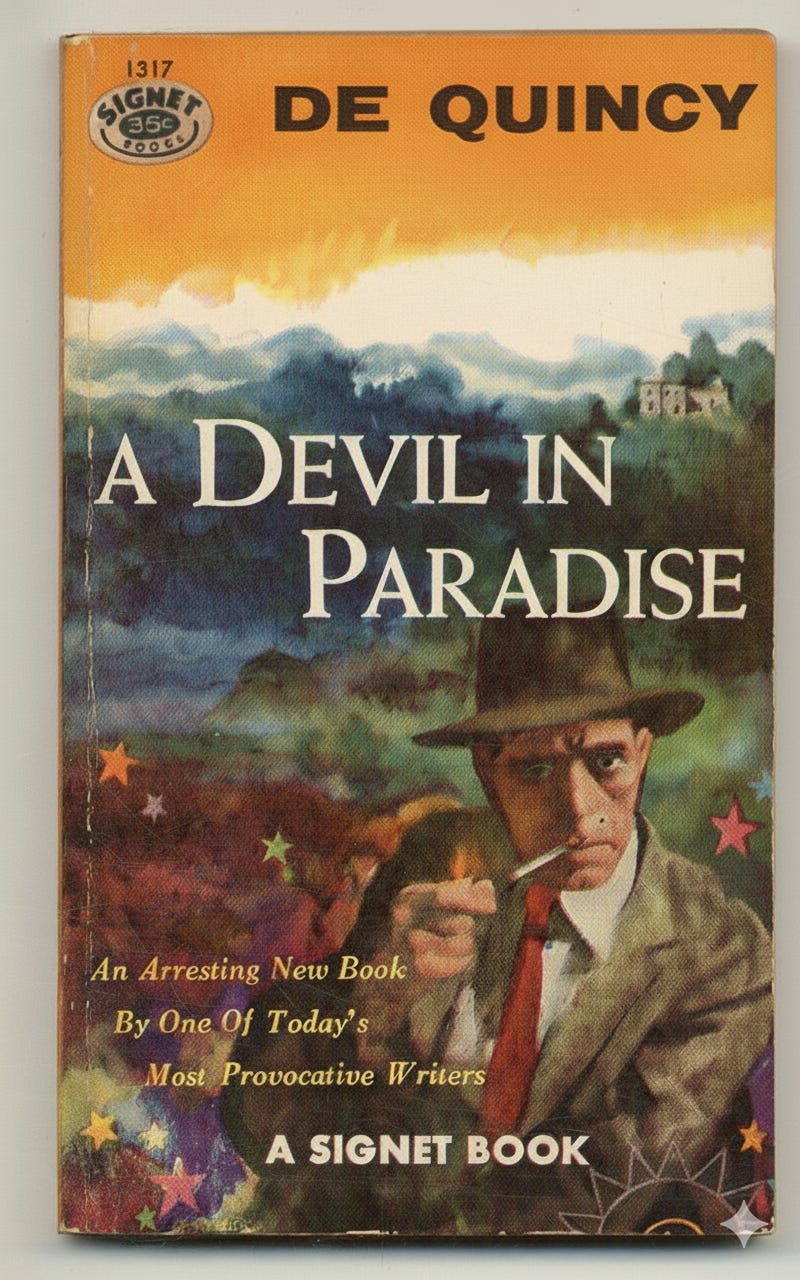
Then I went clean.
Lately, I've been feeling my powers. Okay, very modest powers. I can organize my thoughts, even express them in a way that you can mostly understand.
To find a long-lost part of yourself again is exhilarating. But how could this refried brain possibly have pulled off a comeback?
My mom often wonders the same: '“I thought you were too far gone.”
I think it was the crack. Seriously.
You can't be a writer without having experienced something. You can't be a good writer until you've learned how to be honest.
Addiction and recovery gave me that in spades.
This journey is mending my mind. And the catastrophe of addiction has given me something to share with you. There's the insight that comes from experience. There's hardship and at least a little wisdom gleaned from it.
That probably explains why I'm writing so much these days — probably more than you'd like to read. So many thoughts long pent up with nowhere to go. Thanks for listening.
Honestly, it just feels good to finally keep that childhood promise. I'm vulnerable and real. I'm not exactly the kind of writer I imagined I'd be. And yet, I can’t imagine being any other kind.