

Growing up, my favorite relative was the one I probably knew the least.
Opa.
As kids, my sister and I visited him in Holland. We played hide and seek in the garden and rampaged through the house until we were exhausted. He played board games. And with his food, too.
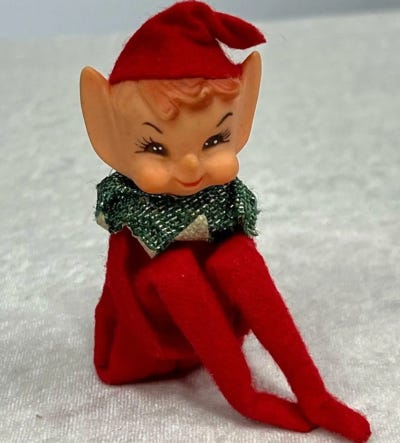
He was forever frolicking. He even looked like a wee Dutch elf.
When he died at the merry old age of 93, Opa still had a full, brassy head of hair. His skin was as smooth as alabaster — though he was quite deaf and refused to wear his shiny new false teeth. He preferred the very old ones he had brought with him from Holland many years earlier.
“They were always clanging in his mouth because they didn't have a good grip,” my mother recalls.
And although Opa had been living in Canada for ages, he didn’t bother learning English. He got by with winks, smiles and an irrepressible sparkle in his eye.
Indeed, Opa acted so much the child for so long, I hardly even noticed that he had developed severe dementia. His twilight years were a torment for the people who loved him. Except, I guess, me.
Then again, I didn’t have to live with Opa, as he buried treasures in the backyard, or played peek-a-boo in hallways in the dead of night. Or just straight up ran for his life, when he suddenly didn’t recognize a single person in the room.
Run Opa, run!

I didn’t have to mourn the man he used to be. A father and husband had become an unknowable shell. I only knew the man with the child in his eyes.
I wanted to be just like him. Happy until the end. Maybe that’s what I saw in drugs — a way to freeze the moment and never get old until you actually die. Which would, in my case, likely happen without warning.
When I was high, the world was flush with wonder again. I could stare at ceiling tiles and find constellations. Even something as mundane as a Bic lighter could fill me with awe. And everyone was my friend. What a magical world!
(It should be noted, however, that my partner, unaware of my habit, was convinced I had brain damage.)
In the fog of addiction, what did I care that I had become a burden to my family? Just let me be happy.
But, of course, I wasn’t happy.
I’m not so sure my demented grandfather was either. Between playful spells, he would weep, scream or even get violent.
Certainly, his family suffered enormously. My mom, who had become his full-time caretaker, was exhausted all the time. My grandmother — Oma — had checked out entirely, retiring to her books on the couch.
While visiting one evening, I sat with Opa. My mom was cooking something delicious. It turned out to be the last meal we’d share.
He delivered a classic performance, winking at me between sips of soup, and even ribbing me in Dutch, while my mom translated. It was a lovely moment that brought back memories of this truly magical man.

I pretended to laugh at all of his jokes — not because I understood them, but because he clearly loved telling them. Just like me!
Finally, after we had giggled and smirked and savored each other’s company for nearly an hour, my mom began gathering dishes.
Still beaming broadly — and without taking his eyes off me — Opa asked my mom something in Dutch.
“What did he say?” I asked my mom, still smiling back at him. I’m not going to stop smiling until you stop smiling, Opa!
“Wie is dat?” my mom replied. “It means, ‘Who is that?’”
She was then and is now a good nurturer, your mah.